Tim Cook to Step Down as Apple Inc. CEO, Passing Leadership to Hardware Chief
Cook, 65, will continue to be engaged with the Cupertino, California, company in his role as executive chairman
Apr 21, 2026 / GMT+6
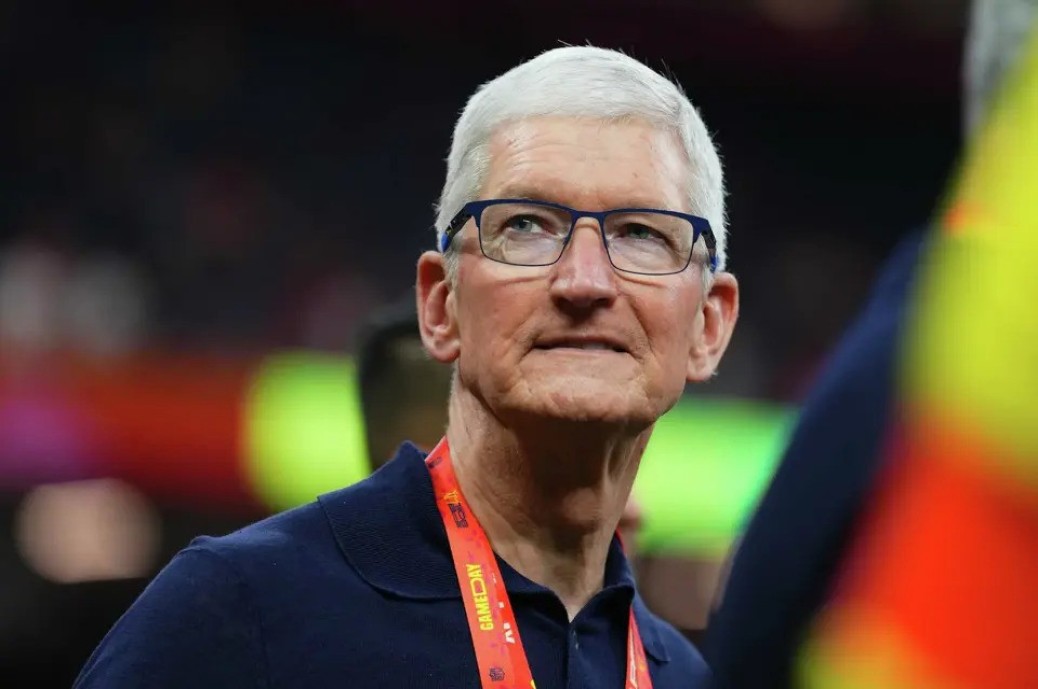
The announcement that Tim Cook will step down as CEO of Apple Inc. marks the end of one of the most successful leadership eras in tech history. After leading Apple since 2011, Cook will hand over the role to John Ternus, the company’s longtime hardware chief. While Cook isn’t leaving entirely—he will remain as Executive Chairman—the shift signals a new chapter for the iPhone maker at a critical moment.
He is resigning from the position he took over from the late Steve Jobs, concluding a 15-year tenure that witnessed the company's market valuation increase by over $3.6 trillion during a prosperous period driven by the iPhone.
Tim Cook took over Apple following Steve Jobs and transformed it into a global powerhouse worth trillions. Under his leadership, Apple expanded beyond the iPhone with products like the Apple Watch and AirPods, while building a massive services business that includes subscriptions, media, and cloud offerings.
Tim Cook, originally from Alabama and a former employee of Compaq Computer as well as Apple’s past rival, IBM, orchestrated the complexities of a global supply chain that tapped into the cost-effective labor and efficiency of manufacturing facilities in China. This strategy has been crucial in the production of Mac computers, iPods, iPhones, iPads, and various other products that contribute significantly to Apple’s yearly revenue of $416 billion, an increase from $108 billion since Cook assumed the role of CEO.
Shortly after Tim Cook assumed leadership, Apple became the inaugural publicly traded company to achieve a valuation of $1 trillion, subsequently reaching valuations of $2 trillion and $3 trillion as well. However, following Apple's gradual entry into the AI sector, chip manufacturer Nvidia capitalized on the surging demand for its processors that facilitate this technology, becoming the first company to surpass the $4 trillion mark and later the first to exceed the $5 trillion threshold as well. Currently, Apple holds a valuation of $4 trillion, a significant increase from $350 billion when Tim Cook took the helm in August 2011, just prior to Steve Jobs' passing after a prolonged battle with cancer.
Now, leadership is shifting to John Ternus, an engineer who has spent over two decades at Apple working on core hardware products like the iPhone, iPad, and Mac. His promotion suggests Apple is doubling down on what it does best: designing premium devices.
What It Means for iPhones 📱
Under Ternus, the answer is likely evolution, not revolution.
Because he comes from a hardware background, Apple is expected to:
- Continue refining iPhone design, performance, and battery life
- Focus on tighter integration between hardware and software
- Push improvements in chips and device efficiency
In simple terms, iPhones will probably become faster, smarter, and more polished, rather than dramatically different overnight. Think better cameras, longer battery life, and smoother performance—not a sudden radical redesign.
The AI Challenge 🤖
One area where Apple has faced criticism is artificial intelligence. While competitors like Google and Microsoft have moved aggressively into AI, Apple has been more cautious.
This leadership change could be a turning point.
Under Ternus, Apple is expected to:
- Integrate AI more deeply into iPhones and other devices
- Improve features like voice assistants, photo editing, and personalization
- Focus on on-device AI, meaning smarter features that work privately without sending data to the cloud
For users, this might look like:
- A much smarter Siri
- Better photo and video enhancements
- More personalized app experiences
Rather than flashy AI tools, Apple will likely aim for AI that “just works” quietly in the background.
Impact on Apple’s Stock 💰
For investors, leadership changes can be risky—but in this case, the reaction has been relatively calm.
Why?
- The transition was planned and gradual, not sudden
- Ternus is a well-known internal leader, not an outsider
- Cook remains involved as Executive Chairman
In simple terms, investors see this as continuity, not disruption.
Short-term:
- Apple’s stock is unlikely to see major shocks
Long-term:
- Growth will depend on how well Apple competes in AI and future technologies
If Apple successfully strengthens its AI capabilities while maintaining strong iPhone sales, the company could continue to grow steadily.
Cook’s Legacy—and What Comes Next
Tim Cook leaves behind a company that:
- Grew from hundreds of billions to trillions in value
- Expanded into services and wearables
- Built one of the most powerful global brands
But he also hands off Apple at a time of new challenges:
- Slower smartphone innovation
- Rising competition in AI
- Pressure to deliver the next big breakthrough
John Ternus now steps into this moment with a clear mission: protect Apple’s strengths while preparing it for the future.