By Shanjid Shane 🕒 Jul 22, 2026
Austria Turns Adolf Hitler's Birthplace Into Police Station to Deter Neo-Nazi Pilgrimages
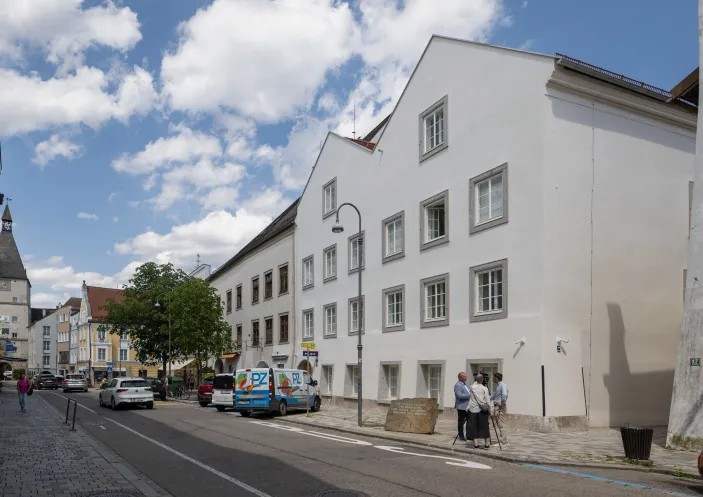
July 22, 2026 — Austria has officially transformed the house where Adolf Hitler was born into a police station, ending years of debate over the future of one of Europe's most controversial historic buildings.
The building, located in the Austrian border town of Braunau am Inn, reopened on Tuesday as the headquarters for local police officers. Austrian authorities say the move is intended to prevent the property from becoming a gathering place for neo-Nazi supporters while giving it a practical role that reflects democratic values.
The decision marks the final stage of a project that has been discussed for decades and follows years of legal disputes, planning and renovation.
Why Austria Turned Adolf Hitler's Birthplace Into a Police Station
Austria's government says converting Adolf Hitler's birthplace into a police station is the best way to remove its symbolic appeal to extremists.
Interior Minister Gerhard Karner said the building now represents "the rule of law, security and democracy"—principles that stand in direct opposition to the ideology promoted by Nazi Germany.
Officials have repeatedly stated that the goal is not to erase history but to ensure the property can no longer serve as a destination for those seeking to glorify Hitler or the Nazi regime.
The renovated building now houses both the district police headquarters and a local police station.
A Building With a Difficult History
Adolf Hitler was born in the house on April 20, 1889, although his family lived there only for a short period before moving elsewhere.
Despite Hitler's brief connection to the property, it later became one of the world's most recognizable addresses because of his role in leading Nazi Germany during the Second World War and the Holocaust.
For decades, Austria struggled to decide what should become of the building.
Different proposals included demolishing it, turning it into a museum, creating a memorial, or using it for social services. Historians and experts remained divided over which option would best acknowledge history while preventing extremist groups from exploiting the site.
Years of Legal Battles and Renovation
The house remained under private ownership for many years before Austria's government took control of the property through expropriation in 2017, following a lengthy legal dispute with its former owner.
In 2019, officials announced plans to convert the building into a police station after recommendations from an independent commission.
Renovation work began in 2023 and reportedly cost around €20 million (approximately US$23 million).
Architects also redesigned parts of the building's exterior to reduce its immediate visual association with historical photographs of Hitler's birthplace.
Today, visitors are greeted simply by a sign reading "Police."
Memorial to the Victims of Nazism Remains
Although the building has a new purpose, Austria has preserved an important reminder of the past.
A memorial stone outside the property remains in place with an inscription calling for peace, freedom and democracy while remembering the millions of victims of Nazi crimes.
The memorial emphasizes that the site should serve as a warning about the consequences of fascism rather than as a place honoring Hitler.
Mixed Reactions to the Decision
The transformation has received broad support from officials who believe the new use removes the building's attraction for extremist groups.
However, some historians and remembrance organizations have argued that the site should also include stronger educational displays explaining Austria's role during the Nazi era and the crimes committed under Hitler's dictatorship.
They believe preserving historical understanding is just as important as preventing extremist symbolism.
Despite differing views, there is broad agreement that the property should never become a shrine for neo-Nazi movements.
Austria's Broader Approach to Remembering History
Austria has spent decades confronting its Nazi-era past through education, memorials and legislation banning Nazi symbols and propaganda.
Turning Hitler's birthplace into a functioning police station reflects that broader effort by giving one of the country's most sensitive historic sites a purpose connected to public service and democratic institutions rather than historical notoriety.
Officials say the project sends a clear message that democratic values have replaced the ideology once associated with the building's most infamous former resident.
Frequently Asked Questions (FAQs)
Why did Austria turn Adolf Hitler's birthplace into a police station?
The Austrian government says the aim is to prevent the building from becoming a pilgrimage site for neo-Nazi groups while giving it a practical public function thatNo. Hitler was born there in 1889, but his family moved away shortly afterward, and he spent only a short time living in the represents democracy and the rule of law.
Where is Adolf Hitler's birthplace?
The house is located in Braunau am Inn, a town in Upper Austria near the German border.
Did Hitler grow up in the house?
No. Hitler was born there in 1889, but his family moved away shortly afterward, and he spent only a short time living in the building.
How much did the renovation cost?
According to official reports, the renovation cost approximately €20 million (around US$23 million).
Is there still a memorial at the site?
Yes. A memorial stone honoring the victims of Nazi crimes remains outside the building and continues to serve as a reminder of the horrors of fascism.
Stay Ahead of the News
Before Everyone Else
Major stories break every hour. Join our news community and receive instant alerts, viral headlines, and important updates the moment they happen.