By Shanjid Shane 🕒 Jul 5, 2026
China's Robot Exports Near 20 Billion Yuan in First Five Months of 2026 as Global Demand Surges
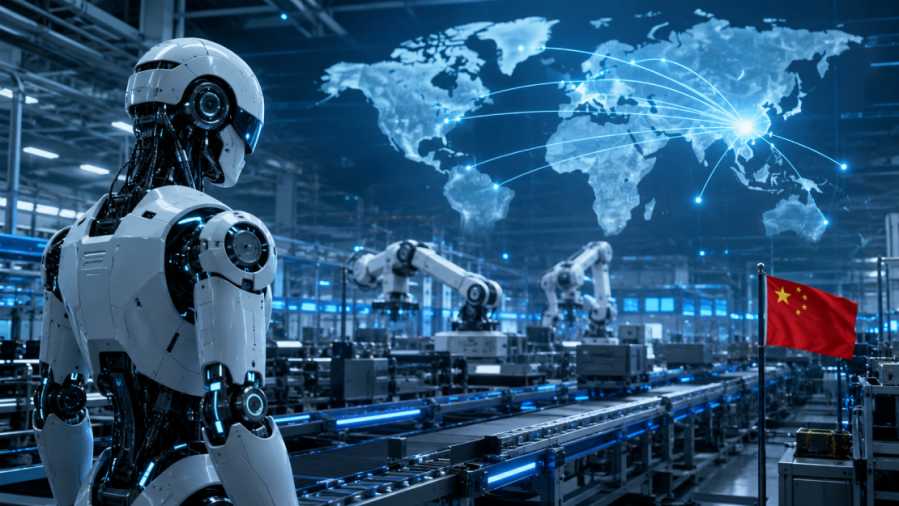
July 5, 2026 — China's robot exports approached 20 billion yuan (about $2.8 billion) during the first five months of 2026, reflecting growing international demand for automation technologies and strengthening the country's position in the increasingly competitive global robotics industry.
According to data released by China's customs authorities, the country exported approximately 10.377 million robots between January and May, reaching customers across more than 150 countries and regions. The figures underline the rapid expansion of China's advanced manufacturing sector as businesses worldwide continue investing in automation to improve productivity and address labor shortages.
The latest export performance comes as robotics becomes one of China's fastest-growing high-tech industries, supported by advances in artificial intelligence, smart manufacturing, and continuous investment in research and development.
Industry analysts say the numbers demonstrate that Chinese robotics manufacturers are no longer competing solely on affordability. Instead, many companies are gaining international recognition for improving product quality, expanding technological capabilities, and offering comprehensive automation solutions for factories, warehouses, healthcare facilities, and commercial operations.
Global Demand Fuels China's Robot Export Growth
Demand for robotics has risen steadily over the past several years as industries around the world accelerate digital transformation.
Manufacturers are increasingly deploying robotic systems to automate repetitive tasks, improve production efficiency, reduce operational costs, and maintain consistent product quality. At the same time, labor shortages in several developed economies have encouraged businesses to invest in automation technologies capable of supporting long-term industrial growth.
These trends have created significant opportunities for Chinese robotics manufacturers, many of which have expanded their international presence through competitive pricing, improved engineering, and broader product portfolios.
Customs data show that the European Union and the Association of Southeast Asian Nations (ASEAN) remained among the largest overseas markets for Chinese-made robots during the January-May period.
Analysts believe demand from both regions is likely to remain strong as manufacturers continue modernizing production facilities and investing in smart factory technologies.
China's Robotics Industry Continues to Expand
The latest export figures reflect broader changes taking place across China's manufacturing sector.
For years, China has been known as the world's largest manufacturing hub. More recently, policymakers and businesses have focused on moving beyond traditional labor-intensive production toward advanced industries such as robotics, artificial intelligence, semiconductor manufacturing, and intelligent equipment.
This transformation has encouraged companies to invest heavily in innovation while expanding production capacity for increasingly sophisticated robotic systems.
Today's Chinese robotics manufacturers produce equipment serving a wide range of industries, including automotive manufacturing, electronics production, logistics, healthcare, agriculture, food processing, and consumer services.
The growing diversity of products has helped companies reach new international customers while reducing dependence on any single export market.
Industrial Robots Lead Manufacturing Automation
Industrial robots remain one of the strongest drivers of China's export growth.
These robotic systems are widely used in automotive assembly lines, electronics manufacturing plants, metal fabrication, packaging facilities, and precision engineering operations. They perform repetitive, hazardous, and highly accurate tasks with speed and consistency, allowing manufacturers to improve efficiency while reducing production errors.
As companies worldwide continue modernizing their factories, demand for industrial robots has increased significantly.
Industry experts say automation is becoming an essential investment rather than an optional upgrade, particularly as manufacturers face rising labor costs and increasing pressure to improve productivity.
Chinese manufacturers have responded by introducing robotic systems with improved precision, higher operating speeds, and greater compatibility with artificial intelligence-based manufacturing platforms.
Artificial Intelligence Adds New Capabilities
Artificial intelligence is playing an increasingly important role in the evolution of modern robotics.
Unlike traditional industrial machines designed to repeat fixed tasks, AI-powered robots can analyze data, recognize objects, adapt to changing environments, and make operational adjustments with minimal human intervention.
Chinese technology companies have invested heavily in integrating AI capabilities into robotic systems, allowing machines to perform increasingly complex functions across manufacturing, logistics, healthcare, and commercial applications.
Experts say the combination of robotics and artificial intelligence is expected to reshape global manufacturing over the coming decade, with intelligent machines becoming more autonomous, efficient, and capable of supporting highly customized production processes.
Beyond Factories: Expanding Applications for Robotics
While industrial manufacturing remains the largest market, robots are increasingly being used across many other sectors.
Warehouse automation has become a major growth area as logistics companies deploy autonomous mobile robots to move goods more efficiently through distribution centers.
Hospitals and healthcare providers are adopting robotic technologies for medical assistance, rehabilitation, pharmacy automation, and patient support.
In agriculture, robotic systems are helping farmers improve productivity through automated harvesting, crop monitoring, and precision farming techniques.
Service robots are also becoming more common in hotels, restaurants, airports, shopping centers, and office buildings, where they assist with cleaning, deliveries, customer service, and security operations.
The expansion of robotics into these industries has created additional export opportunities for Chinese manufacturers seeking to diversify their international customer base.
China's Global Robotics Strategy Gains Momentum
China's expanding robot exports are part of a broader effort to strengthen its position in advanced manufacturing and emerging technologies. Over the past several years, both public and private investment has accelerated across robotics, artificial intelligence, and intelligent manufacturing, helping companies develop products for domestic and international markets.
Industry experts say China's robotics ecosystem now includes component suppliers, software developers, research institutions, and manufacturers working together to improve innovation and production efficiency. This integrated supply chain has enabled many companies to shorten development cycles and respond more quickly to changing customer demands.
The country's strong manufacturing infrastructure has also allowed robotics companies to scale production while maintaining competitive pricing, an advantage that has helped increase exports to both developed and emerging markets.
Chinese Companies Expand Their International Presence
To support long-term growth, many Chinese robotics manufacturers are strengthening their presence overseas through regional offices, service centers, and partnerships with local distributors.
Providing technical support, maintenance services, and employee training has become increasingly important as international customers seek long-term automation solutions rather than one-time equipment purchases.
Participation in international trade exhibitions and technology fairs has also helped Chinese companies introduce new products to global buyers and establish relationships with businesses exploring automation projects.
Analysts say building trust through reliable after-sales service and local support will remain an important factor as competition intensifies in international markets.
Competition in the Global Robotics Industry
China's growing export performance comes amid strong competition from established robotics manufacturers in countries including Japan, Germany, South Korea, and the United States.
These countries continue to lead in several high-end industrial applications, particularly in sectors requiring advanced precision, specialized engineering, and highly customized automation systems.
However, analysts note that Chinese manufacturers have narrowed the technology gap in recent years while offering cost-effective alternatives for many industrial applications.
Rather than competing solely on price, an increasing number of Chinese companies are investing in software development, artificial intelligence, machine vision, and intelligent control systems to deliver more advanced robotic solutions.
This shift reflects the industry's broader move toward innovation-driven growth.
Challenges Remain Despite Strong Export Growth
Although export figures remain encouraging, industry experts caution that several challenges could affect future growth.
Global economic uncertainty may influence investment decisions by manufacturers considering large automation projects. Trade policies, regulatory requirements, and evolving technical standards in different regions could also create additional hurdles for exporters.
Supply chain disruptions and fluctuations in raw material prices remain potential risks for robotics manufacturers worldwide.
In addition, maintaining product quality and protecting intellectual property will continue to be important priorities as companies compete in increasingly sophisticated international markets.
Analysts say sustained investment in research, engineering talent, and product reliability will be essential for preserving China's competitiveness over the long term.
Automation Becomes a Long-Term Global Trend
The demand for automation is expected to continue growing as businesses adapt to changing economic conditions and workforce challenges.
Many manufacturers are investing in robotics not only to reduce labor costs but also to improve workplace safety, increase production flexibility, and maintain consistent quality standards.
The rise of smart factories, connected production systems, and data-driven manufacturing is further accelerating adoption of robotics across industries.
Experts believe these structural trends are likely to support continued growth in the global robotics market throughout the remainder of the decade.
As artificial intelligence becomes more capable, robots are expected to perform increasingly complex tasks with greater autonomy, expanding their role beyond traditional manufacturing into healthcare, logistics, agriculture, construction, and service industries.
Market Outlook for the Rest of 2026
Industry observers remain optimistic about China's robotics export prospects during the second half of 2026.
Continued investment in digital transformation across global industries is expected to support demand for industrial robots, warehouse automation systems, and intelligent service robots.
At the same time, ongoing technological improvements are likely to strengthen the international competitiveness of Chinese robotics manufacturers.
While short-term economic uncertainties may influence purchasing decisions in some markets, the long-term outlook for automation remains positive as companies continue seeking greater efficiency and productivity.
Analysts expect robotics to remain one of the fastest-growing segments of the global technology industry over the coming years.
Why the Latest Export Figures Matter
The latest customs data highlight more than an increase in export value—they reflect China's evolving role in one of the world's most strategically important technology industries.
Robotics has become central to the future of manufacturing, logistics, healthcare, and infrastructure development. As more countries invest in automation, competition among robotics producers is expected to intensify.
China's ability to export millions of robotic products to customers across more than 150 countries and regions demonstrates the scale of its manufacturing capabilities and its growing influence in global technology supply chains.
Whether this momentum continues will depend on sustained innovation, international market demand, and the ability of manufacturers to adapt to rapidly changing technologies.
Frequently Asked Questions (FAQ)
How much were China's robot exports during January-May 2026?
According to official customs data, China's robot exports approached 20 billion yuan, with approximately 10.377 million robots shipped during the first five months of 2026.
Which regions import the most Chinese robots?
The European Union and ASEAN countries remain among the largest overseas markets for Chinese robotics products, although exports reach more than 150 countries and regions worldwide.
Why are Chinese robot exports growing?
Growth has been driven by rising global demand for automation, improvements in robotics technology, competitive manufacturing costs, expanding production capacity, and increasing investment in artificial intelligence and smart manufacturing.
What types of robots does China export?
China exports a broad range of robotic products, including industrial robots, service robots, warehouse automation systems, commercial robots, healthcare robots, and household robotic devices.
What industries are using these robots?
Chinese-made robots are used across automotive manufacturing, electronics, logistics, healthcare, agriculture, food processing, retail, hospitality, warehousing, and commercial services.
Will China's robot exports continue to grow?
Many industry analysts believe demand for robotics will remain strong as businesses continue investing in automation and digital transformation. However, future growth will also depend on global economic conditions, trade policies, and technological innovation.
Stay Ahead of the News
Before Everyone Else
Major stories break every hour. Join our news community and receive instant alerts, viral headlines, and important updates the moment they happen.