By Shanjid Shane 🕒 May 9, 2026
Hungary Gets New Prime Minister as Péter Magyar Ends Viktor Orbán’s 16-Year Rule
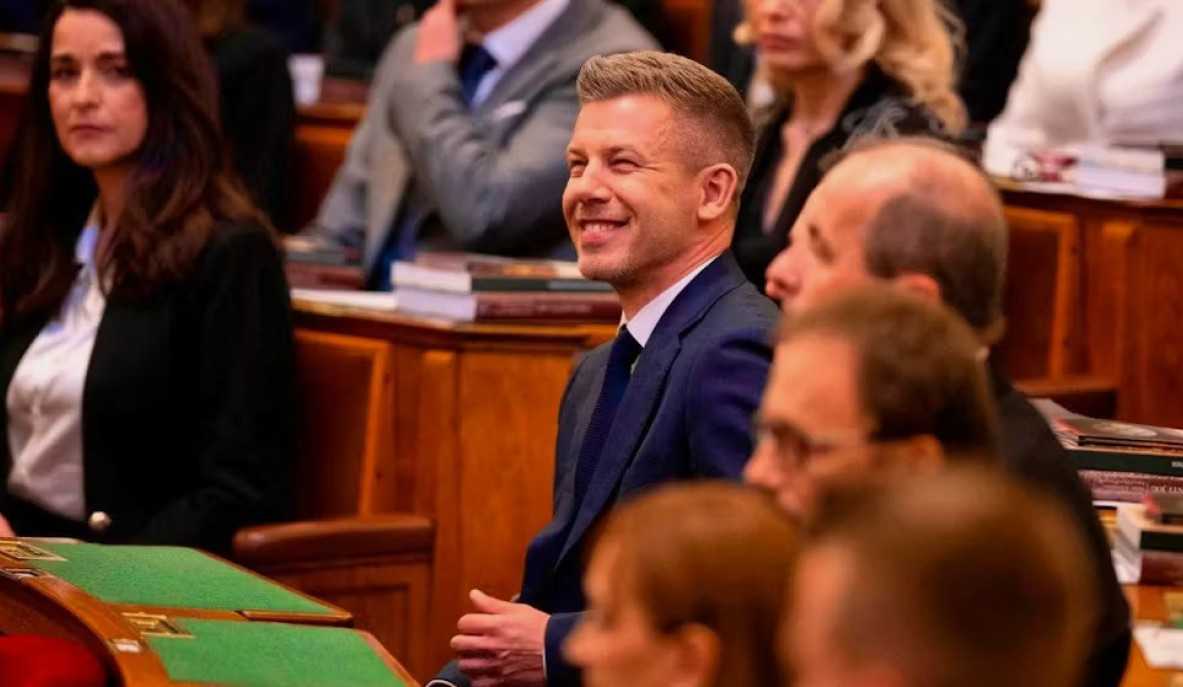
Hungary has entered a new political era after Péter Magyar was sworn in as the country’s new prime minister, ending Viktor Orbán’s 16 years in power.
The ceremony took place in Hungary’s parliament building in Budapest on Saturday, with large crowds gathering outside to celebrate what many supporters called a “historic change”.
Magyar’s centre-right Tisza Party won a huge victory in April’s parliamentary election, defeating Orbán’s long-ruling Fidesz party by a wide margin.
A dramatic political rise
Péter Magyar, 45, was once part of Orbán’s political circle.
He previously worked in government-linked positions and was married to former Justice Minister Judit Varga, one of Orbán’s closest allies.
But in 2024, Magyar publicly broke away from the government after criticizing corruption and what he described as growing abuse of power inside the state system.
Within two years, he turned the small Tisza Party into Hungary’s strongest opposition movement.
Orbán’s long rule comes to an end
Viktor Orbán had led Hungary since 2010 and became one of Europe’s best-known nationalist leaders.
Supporters praised him for defending conservative values, controlling migration, and standing up to the European Union.
Critics, however, accused his government of weakening democracy, limiting press freedom, and placing loyal allies in control of courts, media, and major state institutions.
Under Orbán, Hungary often clashed with the European Union over rule-of-law concerns and close relations with Russia.
Election result shocked Europe
The April 2026 election was one of the biggest political upsets in modern Hungarian history.
Magyar’s Tisza Party won 141 seats in the 199-seat parliament, giving it a powerful two-thirds majority.
Orbán’s Fidesz alliance was reduced to just 52 seats.
The result means Magyar’s government now has enough power to change major laws and reform institutions created during the Orbán years.
Symbolic moments at the inauguration
Thousands of people gathered outside parliament waving both Hungarian and European Union flags.
One of the most talked-about moments was Orbán’s absence from the ceremony. Reports said it was the first time since Hungary’s democratic transition in 1990 that he did not attend the opening session of parliament.
The European Union flag also returned to the parliament building after years of absence — a sign many saw as Hungary moving closer again to the EU.
In his speech, Magyar promised to govern “with service, not domination”.
He said Hungarians had voted for “change, honesty and national unity”.
What Magyar promises to do
The new prime minister says his government will focus on:
- reducing corruption,
- rebuilding democratic institutions,
- improving healthcare and education,
- restoring judicial independence,
- and improving relations with the European Union.
He also wants Hungary to regain billions of euros in EU funding that had been frozen because of concerns about democracy and corruption.
Magyar has signalled stronger support for Ukraine and NATO, marking a possible shift away from Orbán’s Russia-friendly policies.
Challenges ahead
Despite the election victory, Magyar faces serious problems.
Hungary’s economy has been struggling with inflation, budget pressure, and slow growth.
Many important institutions are still controlled by people appointed during Orbán’s rule, which could make reforms difficult.
Orbán also remains an influential figure with millions of supporters, meaning political tensions are likely to continue.
Why this matters beyond Hungary
Orbán had become one of the world’s best-known nationalist-populist leaders and was admired by many right-wing politicians internationally.
Because of that, his defeat is being closely watched across Europe and beyond.
Many European leaders hope Hungary will now cooperate more closely with the EU and stop blocking joint decisions on issues such as Ukraine and sanctions against Russia.
For supporters of Péter Magyar, the change represents the end of what they saw as years of political control and division.
For Orbán’s supporters, it marks the loss of a leader they believed defended Hungary’s national identity and independence.
Either way, Saturday’s inauguration signals the beginning of a major new chapter in Hungarian politics.
Stay Ahead of the News
Before Everyone Else
Major stories break every hour. Join our news community and receive instant alerts, viral headlines, and important updates the moment they happen.