By Shanjid Shane 🕒 May 31, 2026
China Launches New Test Satellite for Internet Technology — What It Could Mean for the Future of Global Connectivity
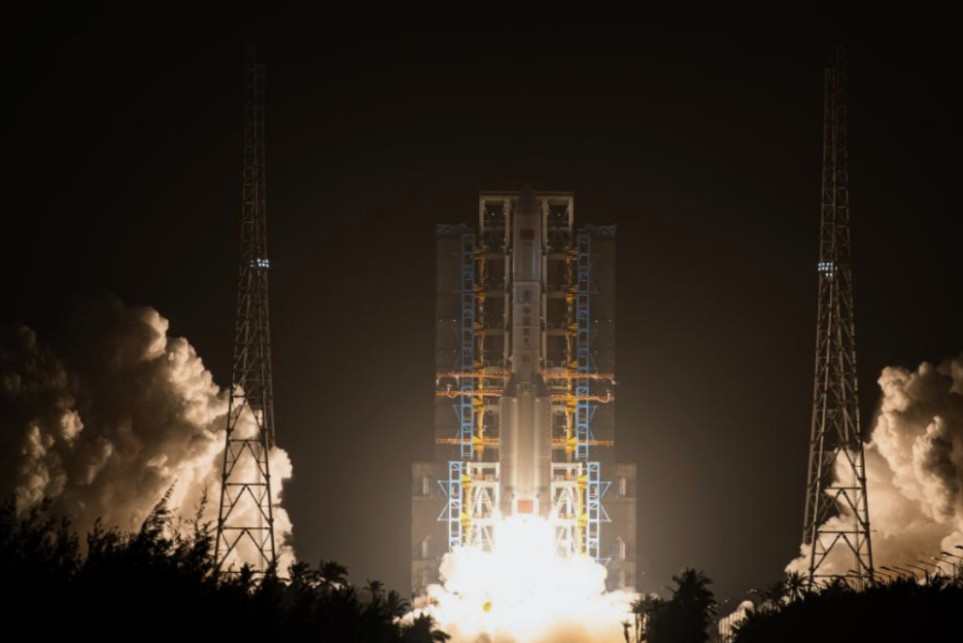
China launches a new test satellite for internet technology, advancing direct smartphone-to-satellite broadband and future space-based internet networks.
China has successfully launched a new test satellite for internet technology, marking another step in the country's efforts to build advanced space-based communications systems.
The satellite lifted off from the Xichang Satellite Launch Center in southwest China during the early hours of Saturday aboard a Long March 2D rocket. Chinese state media reported that the spacecraft entered its planned orbit successfully and will be used to conduct a series of internet technology verification experiments in space.
The mission is designed to test key technologies that could eventually support direct smartphone-to-satellite connectivity and integrated space-ground communication networks.
A Push Toward Direct Satellite Broadband
One of the most notable aspects of the mission is its focus on direct broadband connections between mobile phones and satellites.
Traditionally, satellite communications have required specialized equipment and dedicated satellite phones. New-generation systems seek to remove that barrier by allowing ordinary smartphones to connect directly with satellites orbiting Earth.
If successful, the technology could help provide communication services in remote regions where cellular infrastructure is limited or unavailable.
Industry analysts say direct satellite connectivity could also prove valuable during natural disasters, when ground-based communication networks are often disrupted.
"This type of technology has the potential to significantly expand access to communications services," said one satellite industry analyst familiar with developments in the sector. "The ability to connect standard mobile devices directly to satellites is becoming a major focus for space and telecommunications companies worldwide."
Part of China's Larger Space Internet Strategy
The launch comes as China continues investing heavily in satellite internet infrastructure.
Over the past several years, Beijing has accelerated efforts to develop large-scale low-Earth orbit (LEO) satellite constellations designed to deliver broadband services from space.
Projects such as the state-backed Guowang network and the commercial-oriented Qianfan constellation aim to deploy thousands of satellites capable of providing internet coverage across vast geographic regions.
Experts believe experimental missions like this one play a critical role in validating technologies before they are incorporated into larger operational networks.
The latest satellite is expected to test communication protocols, networking systems, and technologies that allow seamless integration between space-based and terrestrial internet infrastructure.
Why Space-Ground Networks Matter
Future Communications Beyond Traditional Cell Towers
Space-ground integrated networks are increasingly viewed as a key component of next-generation communications systems.
Rather than relying solely on terrestrial cell towers, future networks could combine satellites, wireless infrastructure, cloud computing systems, and mobile devices into a single interconnected platform.
Such systems may improve network reliability and expand coverage to rural areas, oceans, deserts, and other hard-to-reach locations.
Telecommunications researchers have also identified satellite integration as a potential building block for future 6G networks, which are expected to emerge over the next decade.
Limited Technical Details Released
Chinese authorities have provided only limited information about the satellite itself.
Officials have not publicly disclosed details such as:
- The satellite's exact name
- Its orbital altitude
- Technical specifications
- Data transmission capabilities
- Frequency bands being tested
- Expected operational lifespan
This level of secrecy is not unusual for experimental satellite missions, particularly those focused on advanced communications technologies.
Independent satellite trackers and space analysts are expected to monitor the spacecraft in the coming weeks to gather additional information about its orbit and potential capabilities.
Growing Competition in the Satellite Internet Industry
China's latest launch also highlights intensifying global competition in satellite broadband services.
Governments and private companies around the world are racing to build networks capable of delivering high-speed internet directly from space.
The market has attracted growing interest due to increasing demand for global connectivity, emergency communications services, and internet access in underserved regions.
As countries invest in new satellite constellations, analysts expect direct-to-device communications and space-based broadband services to become one of the fastest-growing sectors within the space industry.
Frequently Asked Questions (FAQ)
What is the purpose of China's new test satellite?
The satellite is designed to test internet and communications technologies in orbit, including direct mobile phone-to-satellite broadband connections and integrated space-ground networking systems.
Where was the satellite launched?
The mission launched from the Xichang Satellite Launch Center in southwest China using a Long March 2D rocket.
Why is direct smartphone-to-satellite communication important?
The technology could allow ordinary smartphones to connect directly to satellites, improving connectivity in remote areas and providing backup communications during emergencies.
Is this satellite part of a larger project?
While officials have not confirmed its exact role, experts believe the mission supports China's broader efforts to develop large-scale satellite internet networks and future communications infrastructure.
What details remain unknown?
Authorities have not released information regarding the satellite's technical specifications, orbital altitude, transmission capacity, or operational lifespan.
Stay Ahead of the News
Before Everyone Else
Major stories break every hour. Join our news community and receive instant alerts, viral headlines, and important updates the moment they happen.