By Shanjid Shane 🕒 May 22, 2026
Justice for Ramisa? Nationwide Protests Erupt Over Brutal Murder of Dhaka Schoolgirl as Bangladesh Demands Answers
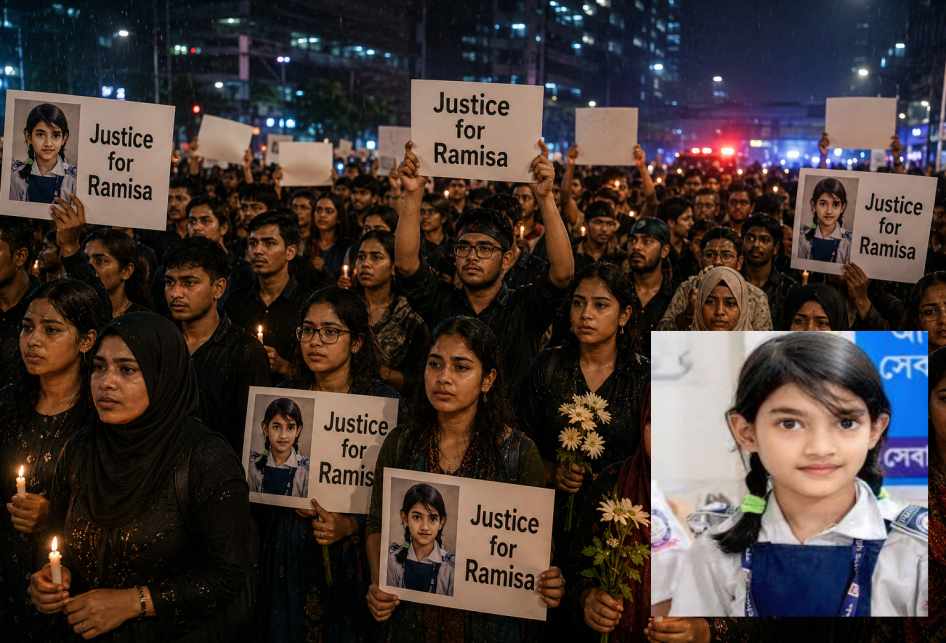
After the shocking murder of an 8-year-old girl in Dhaka, a national outcry has emerged, rallying around the phrase 'Justice for Ramisa.' Prime Minister Tarique Rahman has committed to fast-tracking justice in this heartbreaking situation. Ramisa’s rape and murder case has exposed major flaws in Bangladesh’s rape trial system, including delays, low convictions, and weak investigations.
A wave of deep sorrow and civil unrest has immersed Bangladesh following the horrific rape and murder of eight-year-old Ramisa Akter in the Pallabi neighborhood of the capital. What started as a small community protest has quickly transformed into widespread protest across the nation, prompting a significant response from the highest levels of government.
Demonstrators have brought major intersections in Dhaka to a complete halt, calling for the death penalty for those responsible and demanding a comprehensive reform of child protection laws. This grassroots movement, rallying under the digital banner "Justice for Ramisa," has sparked a significant wave of public outrage over the recent increase in violence against children.
Shaking the National Conscience
On the morning of Tuesday, May 19, 2026, Ramisa, a second-grade student at Mirpur Popular Model School, disappeared shortly after leaving her home. After a desperate search by her family and neighbors, her dismembered body was found hidden under a bed in a nearby apartment within the same building.
The details released by law enforcement sent shockwaves across the country. According to the Dhaka Metropolitan Police, the victim’s severed head was discovered inside a bucket in the bathroom of the flat.
The main suspect, a 34-year-old tenant named Sohel Rana, managed to escape capture for a short time by squeezing through a window grill. However, a swift manhunt led to his arrest in the Fatullah area of Narayanganj within 24 hours. On Wednesday, police announced that Rana had made a formal confession before a Dhaka court under Section 164 of the Code of Criminal Procedure, admitting to the sexual assault and murder of the child.
Prime Minister Tarique Rahman Demands Fast-Track Accountability
As protests emerged at the Mirpur-10 intersection, causing a complete standstill in traffic, Prime Minister Tarique Rahman stepped in to lead the state's response. After wrapping up an emergency cabinet meeting late Thursday night, he made his way to the home of the grieving family in Pallabi.
During a heartfelt 18-minute visit, the Prime Minister offered comfort to Ramisa’s father, Abdul Hannan Molla, who was overcome with emotion. "We lost our daughter because we live in an unhealthy environment.
We want to live in a better place with our elder daughter," Molla expressed to the Prime Minister. In reply, Prime Minister Rahman quickly provided financial support and promised to help the family find safer housing. Additionally, his Press Wing announced that the state would take full responsibility for the education and ongoing support of Ramisa’s older sister, Raisa Akter.
A Systemic Crisis Triggering the Justice for Ramisa Movement
The intense public interest and nationwide outcry surrounding the Justice for Ramisa case reveal a much deeper, systemic worry. According to data from the human rights organization Ain o Salish Kendra (ASK), between January and May 20, 2026, at least 118 children fell victim to rape in Bangladesh, with 14 tragically losing their lives after the assault.
In the ten days leading up to Ramisa's murder, at least six children were killed across various districts. Sociologists point out that the shocking and nearby nature of these crimes disrupts the "Just-World" fallacy—the comforting belief that people are generally safe in their own neighborhoods.
During a visit to the area, Home Minister Salahuddin Ahmed and Law Minister Md Asaduzzaman aimed to rebuild public trust. Home Minister Ahmed reassured everyone that the investigation report and police charge sheet would be expedited to close any legal gaps, promising a fair and thorough trial.
The heartbreaking loss of Ramisa Akter has transformed from a local tragedy into a pivotal moment for public safety accountability in Bangladesh. While the police acted swiftly, making arrests and securing a confession, the ongoing protests in the streets of Dhaka show that citizens are no longer satisfied with just reactive justice. The government's involvement at such a high level suggests they recognize that the public is calling for fundamental changes to ensure that neighborhoods can be safe havens for the most vulnerable members of society.
Will Ramisa Get Justice? Bangladesh’s Broken Rape Trial System Under Fresh Scrutiny
_1779429265.jpg)
[Image of Ramisa]
Bangladesh Faces Renewed Anger Over Ramisa Case
The rape and murder of eight-year-old Ramisa has triggered widespread outrage across Bangladesh, with citizens demanding swift justice and stronger protections for children and women.
The case quickly gained national attention after authorities arrested suspects and promised a fast-track investigation. But for many Bangladeshis, the tragedy has also reopened a deeper debate about whether the country’s justice system can truly deliver accountability in rape cases.
Activists, lawyers, and rights groups say the problem goes far beyond one incident. They argue that Bangladesh’s rape trial system continues to suffer from chronic delays, weak investigations, social pressure, and extremely low conviction rates.
“This is not just about Ramisa,” said a Dhaka-based human rights advocate. “It reflects a system where survivors and families often lose hope long before the trial ends.”
A Pattern of Delayed Justice
Although Bangladeshi law calls for rape trials to be completed within 180 days, many cases remain unresolved for years.
Court backlogs, repeated hearing delays, and slow forensic processes have created a system where justice often moves at a painfully slow pace. Legal experts say many families become financially and emotionally exhausted while waiting for verdicts.
According to previous reports and court data, thousands of violence-against-women cases remain pending across the country. Critics say this has weakened public confidence in the legal process.
In several high-profile cases over the years, public outrage initially pushed authorities into action. Yet many of those cases later became trapped in procedural delays and appeals.
Why Convictions Remain Rare
Bangladesh Rape Trial System Faces Structural Challenges
One of the biggest concerns raised by rights organizations is the low conviction rate in rape cases.
Lawyers and activists point to several recurring problems:
- Poor crime scene management
- Delayed medical examinations
- Weak evidence collection
- Witness intimidation
- Social stigma faced by survivors
- Pressure on families to settle cases privately
Experts say survivors often face additional trauma during investigations and courtroom questioning. In some cases, families reportedly withdraw complaints due to fear, financial hardship, or community pressure.
Former prosecutors and legal observers argue that stronger forensic systems and witness protection programs are urgently needed.
“Without proper investigations, even strong cases can collapse in court,” said one legal analyst familiar with gender-based violence cases.
Public Trust in the System Continues to Erode
The Ramisa case has generated intense discussion online, with many social media users expressing frustration over what they describe as a cycle of outrage followed by inaction.
Women’s rights groups say public anger often fades once media attention declines, leaving survivors and families to navigate a difficult legal process alone.
Several organizations have also renewed calls for broader reforms, including:
- Faster case processing
- Independent investigations
- Better survivor support services
- Psychological counseling
- Safer reporting mechanisms
- Accountability for investigative failures
Human rights advocates warn that unless deeper reforms are introduced, future cases may face the same obstacles.
Pressure Builds on Authorities
Government officials have promised a thorough investigation into Ramisa’s death. Law enforcement agencies say the accused will face legal action under existing criminal laws.
The case has also intensified pressure on policymakers to address wider concerns about violence against women and children in Bangladesh.
Legal scholars say long-term reform will require more than public statements or fast-track promises. They argue that sustainable changes must include judicial reforms, increased funding for forensic services, and stronger protections for victims and witnesses.
For many citizens, the central question remains whether Ramisa’s case will become another symbol of delayed justice — or a turning point for meaningful change.
FAQ Section
Who was Ramisa?
Ramisa was an eight-year-old girl whose rape and murder case sparked nationwide outrage in Bangladesh and renewed debate over the country’s justice system.
What is the "Justice for Ramisa" case?
The case involves the brutal rape and murder of eight-year-old Ramisa Akter, a second-grade student who was killed inside a neighbor's flat in the Pallabi area of Mirpur, Dhaka, on May 19, 2026.
Why is the Ramisa case significant?
The case has become a symbol of broader concerns surrounding delays, low conviction rates, and systemic failures in Bangladesh’s handling of rape trials.
Who is the prime suspect in the murder?
The prime suspect is Sohel Rana, a 34-year-old tenant living in the neighboring apartment. He was arrested within 24 hours in Narayanganj and has since given a full confessional statement in court.
How has the government of Bangladesh responded?
Prime Minister Tarique Rahman personally visited the victim's family, offering financial aid, safer housing, and pledging to sponsor the education of the victim's sister. The Home Ministry has ordered a fast-tracked charge sheet to ensure swift judicial proceedings.
Why are people protesting across Bangladesh?
Citizens and student groups are protesting due to the gruesome nature of the crime and a broader rise in violence against children. Demonstrators are demanding capital punishment for child abusers and faster judicial closures.
What problems exist in Bangladesh’s rape trial system?
Critics cite delayed investigations, weak forensic support, witness intimidation, social stigma, and lengthy court backlogs as major issues.
Are rape cases in Bangladesh often delayed?
Yes. Although laws require faster trials, many cases remain unresolved for years due to procedural delays and overloaded courts.
What reforms are activists demanding?
Rights groups are calling for faster trials, stronger investigations, witness protection, survivor support services, and improved forensic capabilities.
Stay Ahead of the News
Before Everyone Else
Major stories break every hour. Join our news community and receive instant alerts, viral headlines, and important updates the moment they happen.