By Shanjid Shane 🕒 May 20, 2026
Xi and Putin Launch China-Russia Years of Education Amid Growing Global Tensions
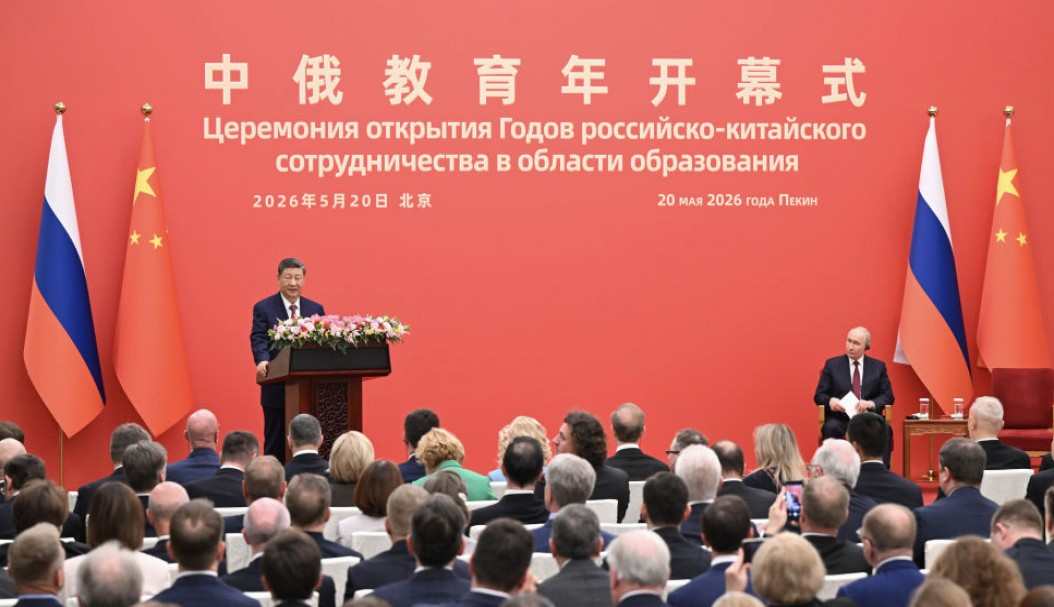
Xi Jinping and Vladimir Putin launch China-Russia Years of Education, signaling deeper geopolitical, technological, and strategic cooperation.
Xi and Putin Launch China-Russia Years of Education Amid Strategic Global Shift
Chinese President Xi Jinping and Russian President Vladimir Putin have formally launched the “China-Russia Years of Education,” a major bilateral initiative that analysts say goes far beyond student exchanges and cultural programs.
The project, introduced as part of broader celebrations marking 75 years of diplomatic relations between China and Russia, reflects a rapidly deepening partnership between the two powers at a time of rising tensions with the West.
While officials in Beijing and Moscow describe the initiative as an effort to strengthen educational and cultural ties, experts believe it also represents a long-term geopolitical strategy centered on technology cooperation, economic resilience, and global influence.
The announcement follows several years of growing coordination between China and Russia in areas ranging from energy and trade to military and diplomatic cooperation.
Education at the Center of a New Strategic Partnership
The China-Russia Years of Education initiative is expected to run through multiple academic cycles and involve universities, research institutions, language programs, and student exchange networks in both countries.
Officials from both governments say the program will include:
- joint university projects,
- scientific research partnerships,
- scholarship programs,
- language education,
- youth forums,
- and technology cooperation.
The initiative builds on previous bilateral programs focused on tourism, media, and culture.
Speaking during the launch event in Beijing, Xi said China and Russia should “strengthen people-to-people exchanges” and deepen long-term cooperation in education and innovation.
Putin described the relationship as one based on “mutual respect and strategic trust,” emphasizing the importance of future generations in maintaining bilateral ties.
Why the China-Russia Years of Education Matter Geopolitically
Analysts say the initiative carries major geopolitical significance, especially after Russia’s invasion of Ukraine in 2022 and the resulting breakdown in Moscow’s relations with much of Europe and the United States.
Western sanctions isolated Russia economically and academically, leading many European universities and scientific institutions to suspend cooperation with Russian organizations.
China, however, continued engagement with Moscow.
That shift has made Beijing one of Russia’s most important international partners.
“This is not simply an education project,” said one Eurasia policy analyst based in Singapore. “It’s part of a broader effort to create long-term institutional links between two countries that increasingly see themselves in strategic competition with the West.”
A Push for Technological and Scientific Cooperation
One of the most significant aspects of the initiative involves science and technology.
China and Russia are expected to expand cooperation in:
- artificial intelligence,
- aerospace engineering,
- energy research,
- cybersecurity,
- advanced manufacturing,
- and digital infrastructure.
Both countries are also facing increasing pressure from Western export controls and technology restrictions.
For Russia, closer academic ties with China may help offset the loss of access to Western research networks and technological partnerships.
For China, the cooperation offers access to Russian scientific expertise, particularly in aerospace, defense-related engineering, and advanced mathematics.
Experts say universities and research institutions are becoming increasingly important in global geopolitical competition.
“Scientific collaboration now has strategic value,” said an international relations researcher in Beijing. “Education and research are no longer separate from national security or economic policy.”
The Ukraine War Changed the Relationship
The partnership between China and Russia accelerated significantly after the Ukraine war began.
Since 2022:
- bilateral trade has expanded sharply,
- China has increased purchases of Russian oil and gas,
- and both governments have strengthened diplomatic coordination in international forums.
Organizations such as BRICS and the Shanghai Cooperation Organisation have become increasingly important platforms for China and Russia to promote what they call a “multipolar world order.”
That phrase is frequently used by both Xi and Putin to describe a future international system less dominated by the United States and its allies.
China Gains Influence as Russia Turns East
Many analysts believe the current balance of the relationship increasingly favors China.
Russia’s economy has become more dependent on Chinese markets, banking systems, and industrial imports since Western sanctions took effect.
At the same time, Beijing has expanded its influence across Eurasia through infrastructure investment, trade, and educational diplomacy.
“This partnership is becoming structurally important for both sides,” said a Moscow-based political analyst. “But Russia now relies on China far more than China relies on Russia.”
Still, experts caution that the relationship is not without tension.
Russia remains wary of becoming economically dependent on Beijing, while China has tried to avoid directly violating Western sanctions that could damage its own global trade interests.
Soft Power and Global Influence
The education initiative also reflects a growing competition over global influence and soft power.
For decades, Western universities dominated international education and scientific research. English-language institutions in the United States and Europe attracted students, scholars, and future political leaders from around the world.
China and Russia are now attempting to strengthen alternative academic and institutional networks.
The initiative is expected to increase:
- Mandarin and Russian language programs,
- student mobility across Eurasia,
- joint scientific publications,
- and educational cooperation among countries aligned with BRICS and other non-Western blocs.
Some experts see this as part of a broader attempt to reshape the global balance of influence in education, technology, and diplomacy.
Concerns in the West
Western governments are closely watching the deepening China-Russia relationship.
Security analysts say closer educational and scientific cooperation could eventually support:
- dual-use technologies,
- cyber capabilities,
- satellite development,
- and advanced industrial research with military applications.
Although both governments present the initiative as civilian and cultural, critics argue that universities increasingly play strategic roles in national competition.
The United States and several European countries have already tightened scrutiny of sensitive academic partnerships involving advanced technologies.
A Long-Term Strategic Message
Beyond the symbolism of ceremonies and speeches, analysts say the China-Russia Years of Education initiative sends a broader message about the direction of global politics.
Rather than treating their relationship as temporary or tactical, Beijing and Moscow appear to be building long-term institutional ties designed to withstand economic pressure, sanctions, and geopolitical instability.
The initiative also suggests that future global competition may extend beyond military power and trade into education, scientific research, and technological ecosystems.
As tensions between major powers continue to grow, universities and academic partnerships are increasingly becoming part of international strategy.
The launch of the China-Russia Years of Education marks more than a diplomatic celebration or academic exchange program. It reflects a deeper transformation in global politics as Beijing and Moscow strengthen ties across education, technology, trade, and strategic planning.
At a time when the international system is becoming increasingly divided, the initiative highlights how universities, scientific research, and cultural diplomacy are emerging as key instruments of geopolitical influence.
FAQ
What is the China-Russia Years of Education initiative?
It is a long-term bilateral program between China and Russia focused on educational exchanges, university partnerships, scientific cooperation, scholarships, and cultural ties.
Why is the initiative important geopolitically?
Experts believe the initiative strengthens strategic cooperation between China and Russia amid rising tensions with the West and growing global competition in technology and influence.
How is the Ukraine war connected to this initiative?
After Russia’s invasion of Ukraine, Western sanctions and academic restrictions pushed Moscow closer to Beijing, increasing cooperation in trade, technology, and education.
Which sectors could benefit most?
Areas expected to see increased cooperation include artificial intelligence, aerospace, engineering, cybersecurity, energy research, and digital technology.
Is the partnership mainly educational?
Officially yes, but analysts say the initiative also supports broader geopolitical, economic, and technological goals for both countries.
Stay Ahead of the News
Before Everyone Else
Major stories break every hour. Join our news community and receive instant alerts, viral headlines, and important updates the moment they happen.