By Shanjid Shane 🕒 Jun 9, 2026
South Korean President Says Japan Must Offer Sincere Apology Before Deeper Military Cooperation
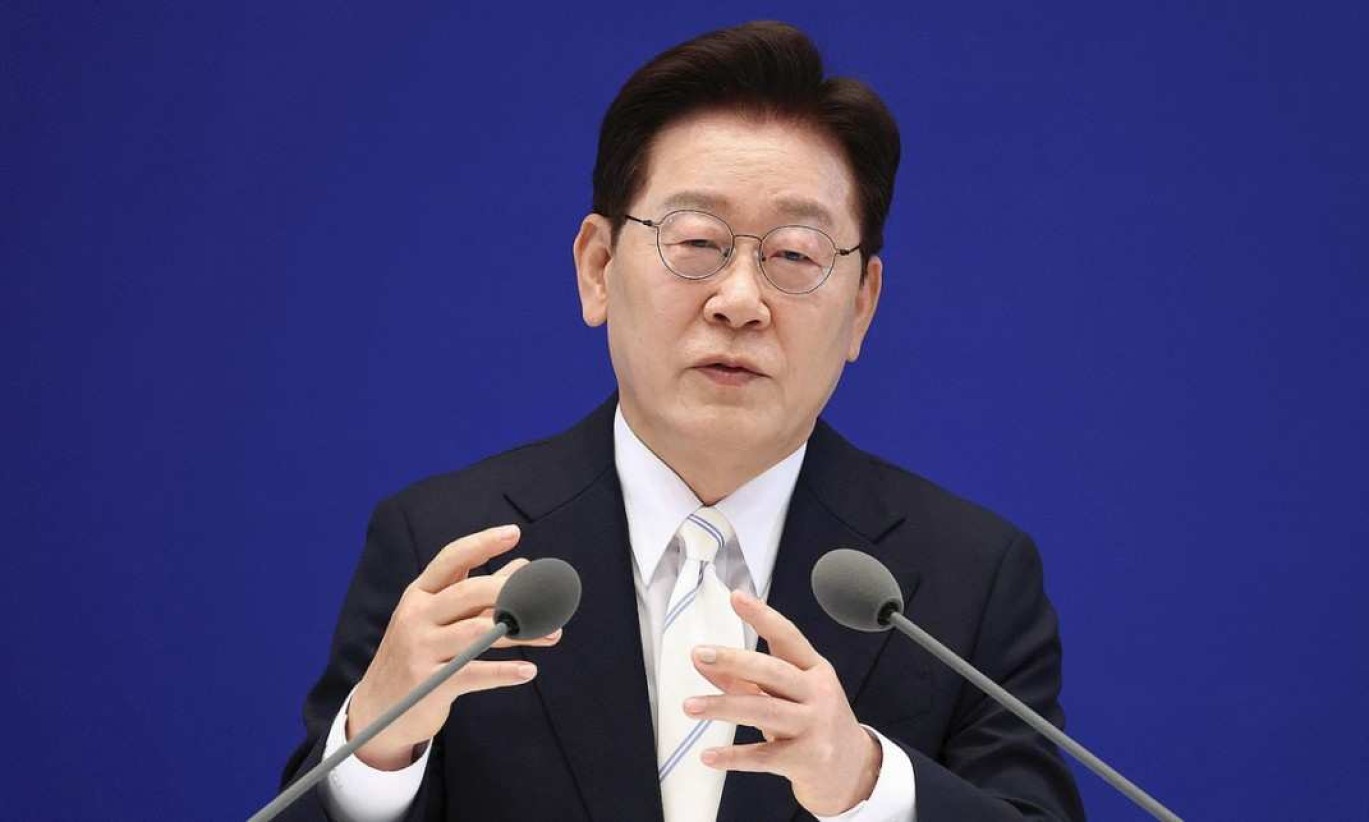
South Korean President Lee Jae-myung has said that a sincere apology from Japan for its colonial rule of the Korean Peninsula is needed before the two countries can significantly deepen military cooperation.
South Korean President Lee Jae-myung said a sincere apology from Japan for its colonial rule of the Korean Peninsula is necessary before Seoul can move toward deeper military cooperation with Tokyo.
Lee made the remarks during a press conference in Seoul on June 8 marking the first anniversary of his inauguration. Responding to a question about a proposed South Korea-Japan Acquisition and Cross-Servicing Agreement (ACSA), which would allow the two countries to provide military supplies and logistical support to each other, Lee said public sentiment in South Korea remains a major obstacle.
He noted that while closer security cooperation with Japan may be practically necessary, many South Koreans still believe Japan has not fully addressed historical grievances stemming from its 1910–1945 colonial rule of Korea.
To make his point clearer, Lee compared the situation to being harmed by someone and then being asked to become friends without first receiving a genuine apology. He said that before relations can advance further, Japan must sincerely acknowledge past actions and express remorse.
Lee added that he had conveyed these concerns to Japanese Prime Minister Sanae Takaichi, explaining that it would be difficult for South Korea to pursue deeper military cooperation without first addressing unresolved historical issues.
Historical Legacy Continues to Shape Relations
Japan's colonial rule of Korea remains one of the most sensitive issues in East Asian diplomacy. Disputes over wartime forced labor, compensation, and the treatment of so-called "comfort women" have repeatedly strained relations between the two neighboring countries.
Although Japan and South Korea have normalized diplomatic ties and developed strong economic partnerships, disagreements over historical responsibility continue to surface.
Many South Koreans believe Japan has not fully acknowledged or apologized for the suffering caused during the colonial period, while Japanese leaders argue that previous agreements and statements have addressed those concerns.
Why Japan Ruled Korea
Japan's colonial rule of Korea lasted from 1910 to 1945, a period that remains one of the most sensitive issues in relations between South Korea and Japan.
How Japan Took Control of Korea
In the late 19th and early 20th centuries, Japan was rapidly modernizing and expanding its influence in East Asia. Korea, strategically located between Japan, China, and Russia, became a focal point of regional competition.
Several key events led to Japan's annexation of Korea:
- 1894–1895: Japan defeated China in the First Sino-Japanese War, weakening China's traditional influence over Korea.
- 1904–1905: Japan defeated Russia in the Russo-Japanese War, establishing itself as the dominant power in Northeast Asia.
- 1905: Korea became a Japanese protectorate under the Japan-Korea Protectorate Treaty.
- 1910: Japan formally annexed Korea through the Japan-Korea Annexation Treaty.
Japan argued that annexation would bring modernization and stability. Many Koreans, however, viewed it as an illegal occupation imposed under coercion.
What Happened During Colonial Rule?
Political Repression
Japan dissolved Korean sovereignty and governed the peninsula directly through a colonial administration.
Koreans had limited political rights, and opposition movements were often suppressed. Activists who advocated independence faced imprisonment, torture, or execution.
One notable event was the March First Movement, when millions of Koreans participated in peaceful demonstrations demanding independence. Japanese authorities responded with a crackdown that resulted in thousands of deaths and arrests.
Cultural Assimilation
Japan pursued policies aimed at integrating Koreans into the Japanese Empire.
These measures included:
- Restrictions on Korean-language education
- Promotion of Japanese language use
- Encouragement or pressure to adopt Japanese names
- Efforts to promote loyalty to the Japanese emperor
Many Koreans saw these policies as attempts to erase their national identity and culture.
Economic Changes
Japan invested in infrastructure, including:
- Railways
- Roads
- Ports
- Industrial facilities
Supporters of Japan's historical position sometimes point to these developments as evidence of modernization.
However, many historians note that much of the economic activity was designed primarily to serve Japan's imperial interests. Large amounts of Korean land and resources came under Japanese control, and many Koreans remained poor despite industrial growth.
Forced Labor During World War II
As Japan's war effort expanded during the 1930s and 1940s, hundreds of thousands of Koreans were mobilized to work in:
- Mines
- Factories
- Construction projects
- Military support operations
Many were sent to Japan or other parts of the empire under harsh conditions.
The issue of wartime forced labor remains a major source of disagreement between South Korea and Japan today.
The "Comfort Women" Issue
One of the most controversial and emotional legacies of colonial rule involves so-called "comfort women."
Thousands of women, many of them Korean, were recruited, coerced, or forced into military brothels operated for the Japanese military during World War II.
Survivors and advocacy groups have long sought:
- Formal recognition
- Apologies
- Compensation
The issue continues to affect public opinion and diplomacy between the two countries.
How Colonial Rule Ended
Japan's rule over Korea ended in August 1945 after Japan's surrender at the end of World War II.
However, Korea was then divided into Soviet- and American-administered zones, eventually leading to the creation of:
- North Korea
- South Korea
This division later contributed to the Korean War.
Why the Issue Still Matters Today
Although Japan and South Korea normalized relations in 1965 through the Treaty on Basic Relations between Japan and the Republic of Korea, disagreements persist over whether Japan has fully acknowledged and atoned for its colonial-era actions.
Japan has issued several statements expressing remorse and apology, including notable declarations by former prime ministers. However, many South Koreans believe:
- Some apologies lacked consistency.
- Certain Japanese politicians have made remarks perceived as minimizing past abuses.
- Victims have not received sufficient justice.
As a result, historical memory remains deeply intertwined with modern issues such as defense cooperation, trade, and diplomacy.
Why President Lee Raised the Issue
When President Lee Jae-myung said a sincere apology is needed before significantly deepening military cooperation with Japan, he was reflecting a widely held sentiment among many South Koreans: security cooperation may be important, but unresolved historical grievances continue to influence public trust.
This is why discussions about military agreements between South Korea and Japan often involve not only current security concerns but also events that occurred more than 80 years ago during Japan's colonial rule of Korea.
Security Cooperation Faces Political Challenges
The comments come at a time when South Korea, Japan, and the United States have sought closer coordination on regional security issues, particularly in response to North Korea's missile programs and broader geopolitical tensions in the Indo-Pacific.
Military cooperation between Seoul and Tokyo has improved in recent years, including intelligence-sharing and joint security initiatives.
However, Lee suggested that stronger defense ties require a foundation of trust, which he said is closely linked to how historical issues are handled.
Analysts say the statement reflects a balancing act between maintaining regional security partnerships and responding to domestic expectations regarding historical justice.
Japan's Position
Japanese governments have issued several statements of remorse and apology over actions during the colonial era. However, debates continue over whether those expressions have been sufficiently clear and consistent.
Tokyo maintains that many historical disputes were settled through past bilateral agreements, while Seoul has often argued that unresolved issues remain, particularly those involving individual victims.
The differing interpretations have periodically led to diplomatic tensions, trade disputes, and public disagreements.
Regional Implications
Lee's comments underscore the challenge facing both governments as they seek to strengthen cooperation amid an increasingly complex security environment.
The United States has encouraged closer ties between its two key Asian allies, viewing cooperation among Washington, Seoul, and Tokyo as important for regional stability.
Experts say future progress in military and diplomatic relations may depend on both sides finding ways to address historical concerns while pursuing shared strategic interests.
Stay Ahead of the News
Before Everyone Else
Major stories break every hour. Join our news community and receive instant alerts, viral headlines, and important updates the moment they happen.