Europe Shocked as Trump Targets 8 Nations With Tariffs Over Greenland Dispute
European leaders described the tariffs as “wrong” and “unacceptable”.
2 hours ago
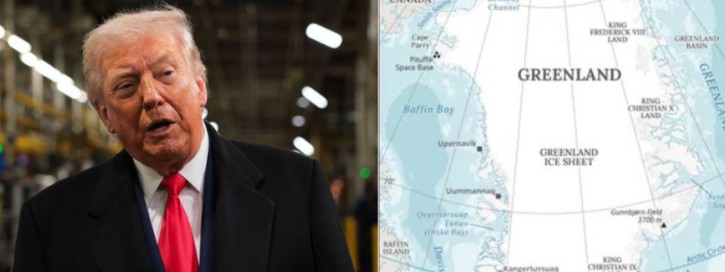
On January 18, 2026, Trump said that eight European nations — Denmark, Norway, Sweden, France, Germany, the U.K., the Netherlands, and Finland — would face 10% tariffs starting February 1, rising to 25% by June 1 if no deal is reached for Washington to buy Greenland.
The tariffs are meant to punish these countries for resisting U.S. control over Greenland, a territory of Denmark.
Analysts warned this could trigger a “dangerous downward spiral” in U.S.-Europe relations.
Protests erupted in Nuuk, Greenland’s capital, where thousands gathered outside the U.S. consulate waving Greenlandic flags.
The joint statement from Denmark, Finland, France, Germany, the Netherlands, Norway, Sweden, and the United Kingdom strongly rejected U.S. tariff threats linked to the Greenland dispute. They called the move “wrong and unacceptable” and emphasized their unity in defending international law and European interests.
⚡ Why Greenland Matters
Greenland is strategically important because of its Arctic location, military value, and natural resources.
Several European countries recently sent troops to Greenland, officially for Arctic security training, but also signaling resistance to U.S. ambitions.
Trump’s push to buy Greenland dates back years, but this is the most aggressive step yet.
🌍 Key Points from the Statement
The eight countries said Trump’s announced tariffs were unjustified and harmful to transatlantic relations. They reaffirmed that Greenland is part of the Kingdom of Denmark and its status is not negotiable. The statement highlighted that Europe stands together against attempts to pressure them through economic measures. While rejecting the tariffs, they urged the U.S. to return to constructive dialogue instead of escalating tensions.
⚡ Why This Matters
Tariffs would raise costs for European exports to the U.S., affecting industries from manufacturing to agriculture. By issuing a joint statement, these countries showed rare unity in confronting Washington, signaling that Europe will not be divided on Greenland. Greenland’s strategic location in the Arctic makes it valuable for military positioning and natural resources, which explains why the U.S. is pushing so hard.
This dispute risks weakening NATO cooperation and trust between the U.S. and Europe. Analysts warn that China and Russia could exploit the rift, strengthening their own influence in the Arctic. The statement is meant to reassure both European citizens and Greenlanders that their governments will resist U.S. pressure.