By Shanjid Shane 🕒 May 14, 2026
“Football Will Never Be the Same”: BTS, Madonna and Shakira to Headline Historic FIFA World Cup Final Show
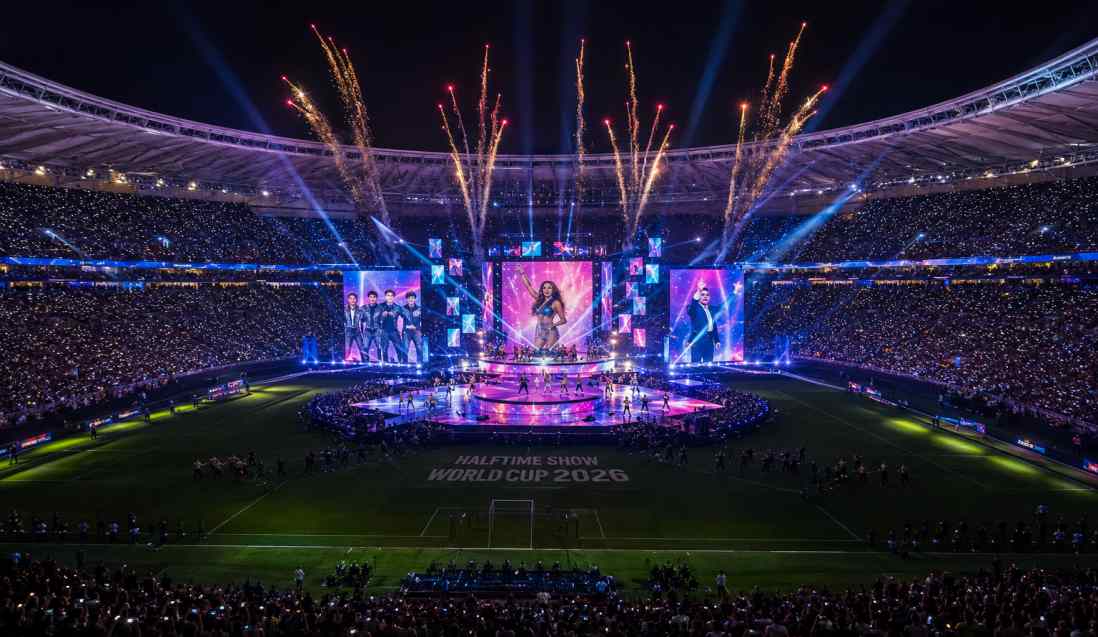
FIFA has confirmed that BTS, Madonna and Shakira will headline the first-ever halftime show in FIFA World Cup final history — a move that could permanently reshape how football’s biggest event is presented to the world.
The performance will take place during the 2026 FIFA World Cup final on 19 July at MetLife Stadium in New Jersey, as FIFA embraces a more entertainment-driven approach inspired by the NFL Super Bowl. The show is being curated by Coldplay frontman Chris Martin in partnership with Global Citizen.
The announcement has already triggered huge global reaction across sport, music and social media, with fans calling it one of the most ambitious entertainment lineups ever attached to a sporting event.
FIFA enters a new entertainment era
For decades, the FIFA World Cup final has remained largely untouched by the kind of large-scale halftime productions seen in American sports.
Traditional football halftime breaks last only 15 minutes and are typically focused on tactical preparation rather than entertainment.
But FIFA’s decision to introduce a concert featuring three of the world’s biggest music acts signals a major cultural shift.
The organisation appears determined to transform the World Cup final into a global entertainment spectacle capable of attracting not only football audiences, but also younger viewers, music fans and digital audiences worldwide.
Industry analysts say the move reflects FIFA’s growing focus on:
- streaming audiences
- social media engagement
- global sponsorship revenue
- crossover entertainment culture
The 2026 tournament — hosted by the United States, Canada and Mexico — will already be the largest World Cup ever, featuring 48 national teams and 104 matches.
Adding a halftime show is widely seen as part of FIFA’s broader effort to expand the commercial power of the competition.
Why BTS could dominate the global spotlight
Among the performers, BTS may generate the largest online reaction.
The South Korean group remains one of the world’s most influential music acts, with an international fanbase capable of driving enormous engagement across platforms including:
- YouTube
- TikTok
- X
- streaming services
The timing is also significant.
Several BTS members have recently completed South Korea’s mandatory military service, making the World Cup appearance one of the group’s highest-profile global performances in years.
Entertainment experts believe the event could become one of the most watched live music moments in internet history.
The inclusion of BTS also highlights FIFA’s growing focus on Asian audiences and youth culture, particularly as K-pop continues to dominate global entertainment trends.
Shakira returns to football’s biggest stage
Shakira’s involvement carries strong symbolic weight for football fans.
Her song “Waka Waka (This Time for Africa)” became one of the defining anthems of the 2010 FIFA World Cup and remains closely associated with football culture worldwide.
She has since become one of the artists most strongly linked to major football events, including the Copa América final halftime show in 2024.
That performance effectively tested the concept of large-scale halftime entertainment in football and reportedly influenced FIFA’s decision to introduce a similar format for the World Cup final.
Some reports suggest Shakira may debut new football-themed music during the 2026 event, although FIFA has not confirmed the final performance details.
Madonna brings legacy star power
Madonna’s role in the lineup appears designed to broaden the event’s international and cross-generational appeal.
While BTS connects strongly with younger digital audiences and Shakira resonates with football and Latin music fans, Madonna adds decades of global pop recognition and mainstream cultural influence.
Analysts say the lineup has been carefully constructed to maximise worldwide reach across multiple generations and entertainment markets.
Fans divided over “Super Bowl-style football”
The announcement has not been universally welcomed.
Many football supporters argue that introducing halftime concerts risks turning football into a heavily commercialised entertainment product similar to American sports.
Critics have questioned whether:
- extended halftime breaks could affect players physically
- football traditions are being diluted
- FIFA is prioritising entertainment over sport
Others, however, see the move as a natural evolution of modern global sport, especially in an era dominated by streaming platforms, celebrity culture and social media.
The debate reflects a broader tension inside football between traditional sporting identity and expanding commercial ambitions.
A defining moment for modern sport
Whether celebrated or criticised, the halftime show is already being viewed as one of the defining cultural moments of the 2026 FIFA World Cup.
If successful, experts believe FIFA could permanently integrate halftime entertainment into future tournaments — potentially changing football’s relationship with music, celebrity culture and live global broadcasting for years to come.
Stay Ahead of the News
Before Everyone Else
Major stories break every hour. Join our news community and receive instant alerts, viral headlines, and important updates the moment they happen.